
Ahmed Timol left South Africa in December 1966 to perform the Hajj, beginning a journey that deepened his political commitment. In London, the teacher stayed with Aziz and Essop Pahad, taught immigrant children and met Ruth Longoni at an anti-nuclear march. His involvement with the South African Communist Party led to political and underground training in the Soviet Union, followed by further instruction in London. Despite recognising the risk of arrest, Timol returned to South Africa in February 1970. His nephew, author Imtiaz Ahmed Cajee, recounts the love, relationships and convictions that shaped his decision to continue the struggle against apartheid.
IOL: NEWS OPINION
IMTIAZ AHMED CAJEE 17 OCTOBER 2026
When Ahmed Timol had completed his third year as a teacher at the Roodepoort Indian High School (RIHS) at the end of 1966, he had travelled only in a small corner of South Africa. His horizons were about to be broadened immeasurably. He left South Africa on 25 December 1966 to perform the Hajj (5th Pillar of Islam) in Saudi Arabia. At the time, few Muslims embarked on the pilgrimage to Mecca at such a tender age. He was just 25 years old.
During the pilgrimage, he met Dr Yusuf Dadoo (Mota) and Molvi Cachalia. Dadoo was an anti-apartheid leader with impeccable credentials, who chaired both the South African Communist Party (SACP) and the South African Indian Congress (SAIC), whilst Cachalia was another senior South African anti-apartheid activist. Fellow Haji’s recall how helpful Timol was during the pilgrimage by assisting in carrying their luggage.
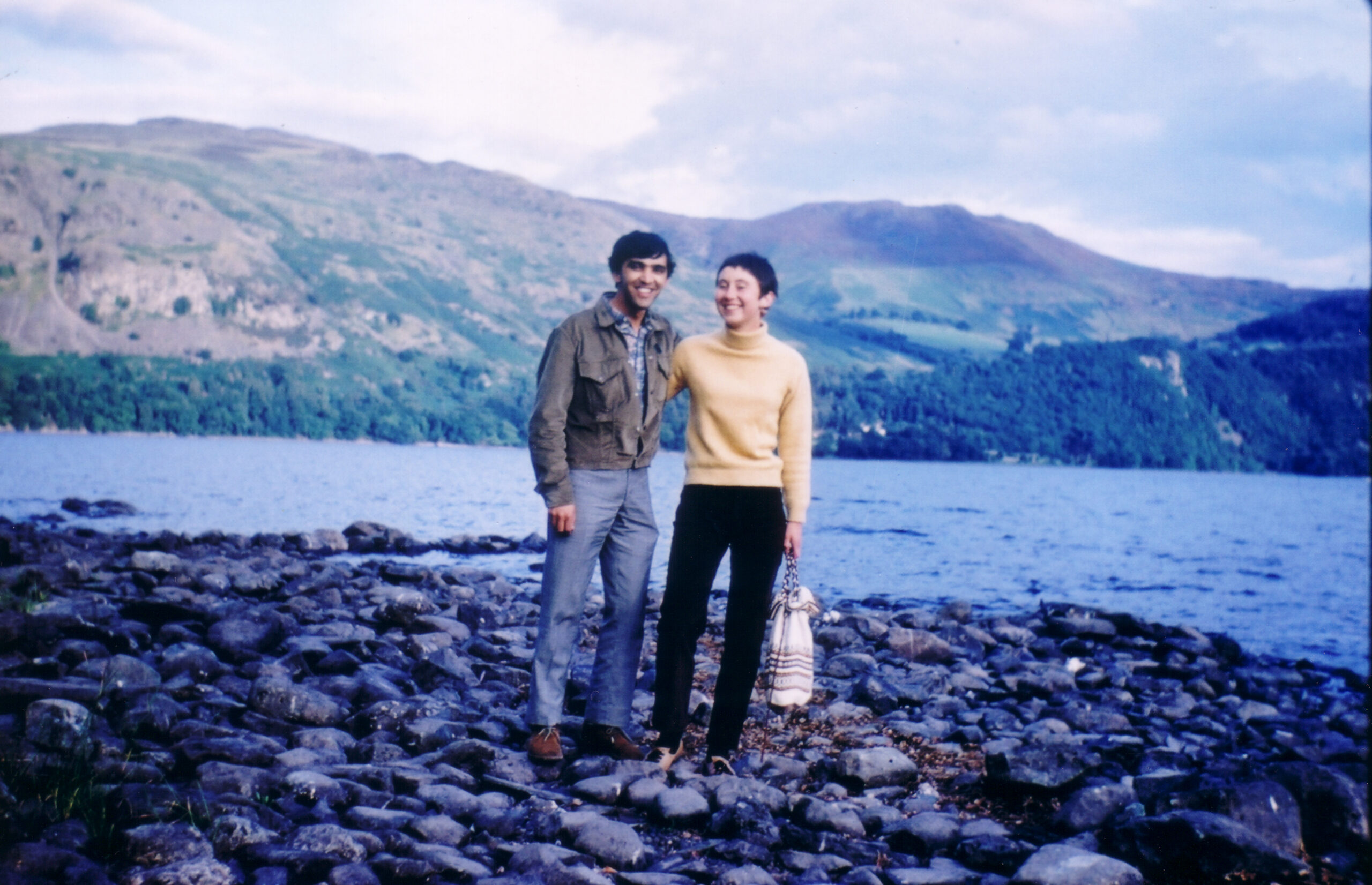
Ahmed Timol in London
After the pilgrimage, Timol toured Cairo, Egypt for a few weeks and arrived in London in April 1967 and stayed at the flat of his friends Aziz and Essop Pahad in North end House, West Kensington. To make a living, Ahmed taught children from the Indian subcontinent (India, Pakistan and Bangladesh) at an immigrant school in Slough, approximately 34km from London.
He was also an active member of the National Union of Teachers and also furthered his studies by attending evening classes to fulfil the requirements to write his A-Levels, a prerequisite for acceptance to study at a British university or polytechnic. This was equivalent to a South African Standard Nine and in order for one to do a tertiary course or degree, one had to do A levels. Timol enrolled to broaden his mind, rather than to enter university.
During his stay in London, Timol met the love of his life, Ruth Longoni who was working for Labour Monthly, a journal edited by Palme Dutt Ranjit, a founding member of the Communist Party of Great Britain and one of the founding members of the magazine. They met around Easter in 1967 attending an Aldermaston march organised by the Campaign for Nuclear Disarmament. Ahmed was interested in people and was talking to those attending the march ascertaining the reasons for their being there.
A week later Ahmed called Ruth and within a short period of time, Ruth realised that they shared a great deal in common, despite coming from different backgrounds. The pair were also emotionally on the same wavelength and Ruth was also a member of Communist Party of Great Britain.
Timol shared with Ruth his experiences of living in South Africa. He spoke about the daily humiliations that Indian South Africans faced in various ways.
This included not going to certain restaurants and that if he went out with friends, they would have to get drinks from a kiosk and other similar problems. However, he described the situation for a black South African as being far worse and he had tremendous feelings of compassion and anger at the treatment meted out to black South Africans.
Underground Political Training
Ruth saw Timol as a man of tremendous compassion who had great deal of empathy with the oppressed people of South Africa and wanted to effectively change their situation. Timol also spoke of his deep affection for his mother Hawa and described her as a kind, simple and loving woman.
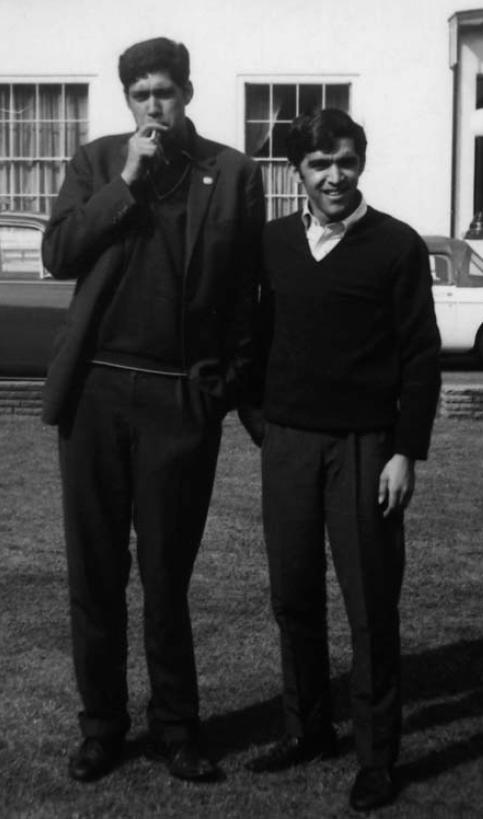
In September 1968, Timol’s younger brother Mohammad, aged 19, arrived in England after acquiring a scholarship from the Roodepoort Muslim Society to study textile engineering at Leicester Polytechnical College.
At the time, London was the headquarters for the exiled ANC leadership and its membership was public knowledge. However, membership of the Communist Party was totally secret and only known to members belonging to a particular unit. Ahmed reunited with Dr Dadoo, a leading figure of the Communist Party, holding discussions with him.
During his stay in London, he displayed his keen interest in executing serious tasks for the movement. There was consensus that it was important to build underground structures in South Africa and to intensify the armed revolutionary struggle.
A decision was taken by Dr Dadoo and the Communist Party leadership for Ahmed to go to the Party School, the Institute of Social Studies, also called the International Lenin School, in the Soviet Union.
Timol, aged 28, accompanied by future President Thabo Mbeki and Ann Nicholson had undergone political training in the Soviet Union and enrolled for political studies from February until October 1969. The various training courses Ahmed attended included political economy and philosophy, social psychology of a people, how to work with people, history of the CPSU (Communist Party of the Soviet Union), how to set up dead letter boxes, setting up of underground structures, how to recruit members and radio communication.
Founding member of uMkhonto we Sizwe
Upon his return to London, Ahmed received additional training for four weeks from Jack Hodgson. He was a member of the South African Communist Party, founding member of uMkhonto we Sizwe (MK) who trained cadres before its launch on 16 December 1961 and after being placed under house arrest in 1963, he and his wife Rica left the country and went to exile in London.
Ahmed and Essop spoke in detail about conducting underground work. He had to be very careful and the possibility of his arrest upon his return was very high, especially in view of his residence with the Pahad brothers in London. They also discussed how Ahmed was to respond under torture.
Ultimately, Ahmed took the decision to leave London and return to South Africa. This demonstrates the sacrifice he was willing to make by leaving Ruth and the comforts of London to return to South Africa in February 1970 to continue the Struggle. A luta Continua!
Imtiaz Ahmed Cajee is the nephew of Ahmed Timol and author of TIMOL – QUEST FOR JUSTICE (2005) and THE MURDER OF AHMED TIMOL – MY SEARCH FOR THE TRUTH. He is currently working on publishing his third book.
This article was first published by The National
IOL