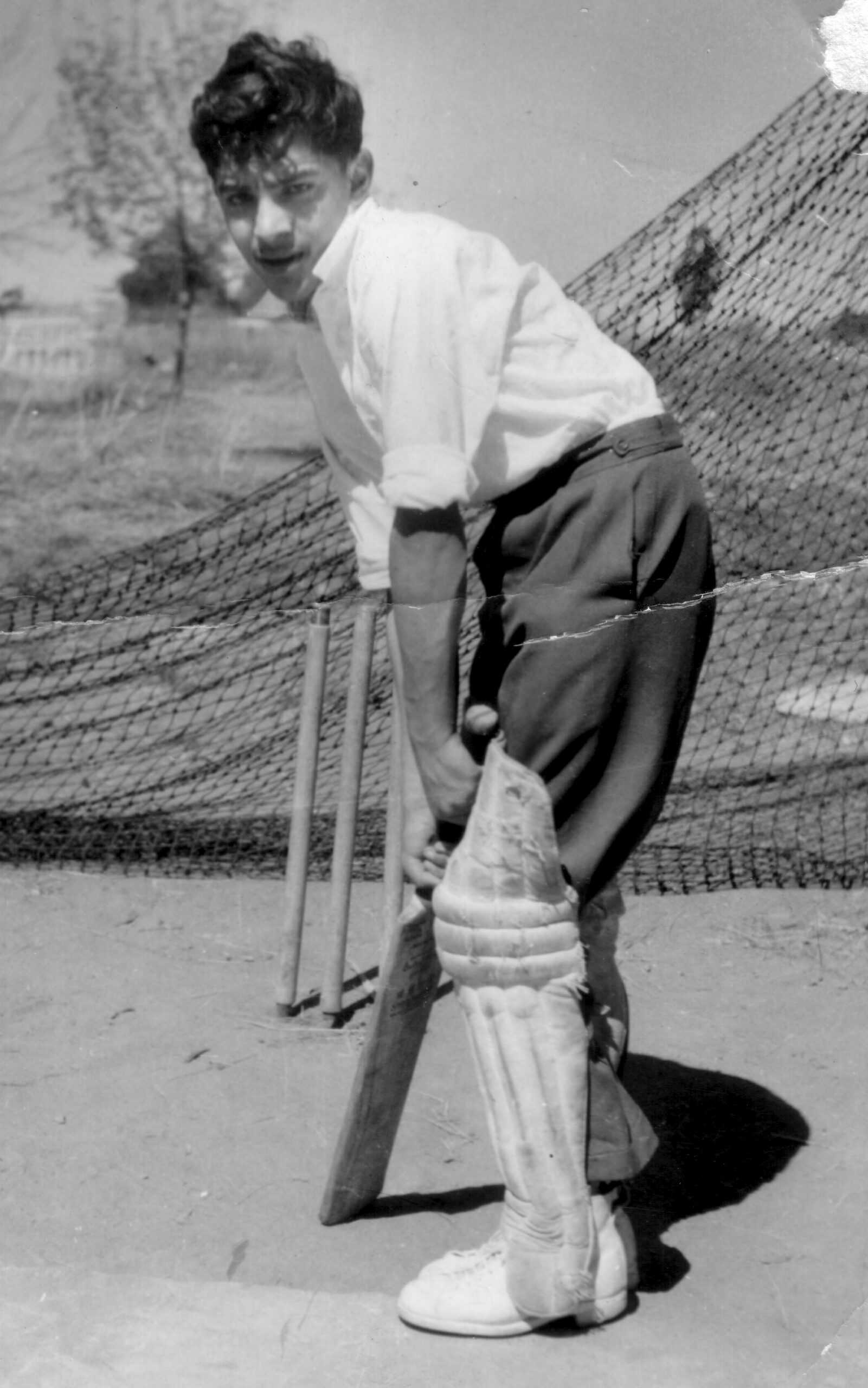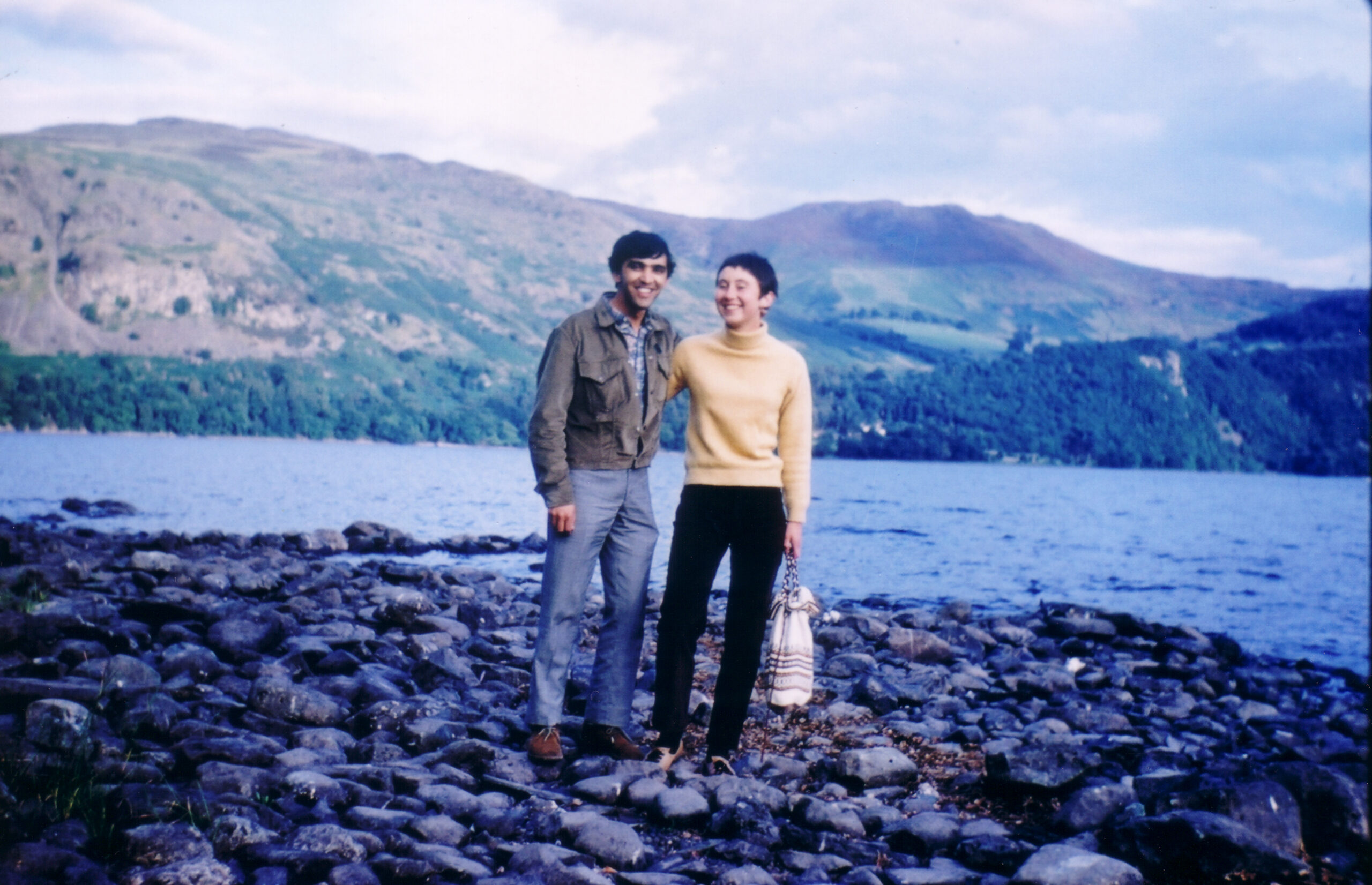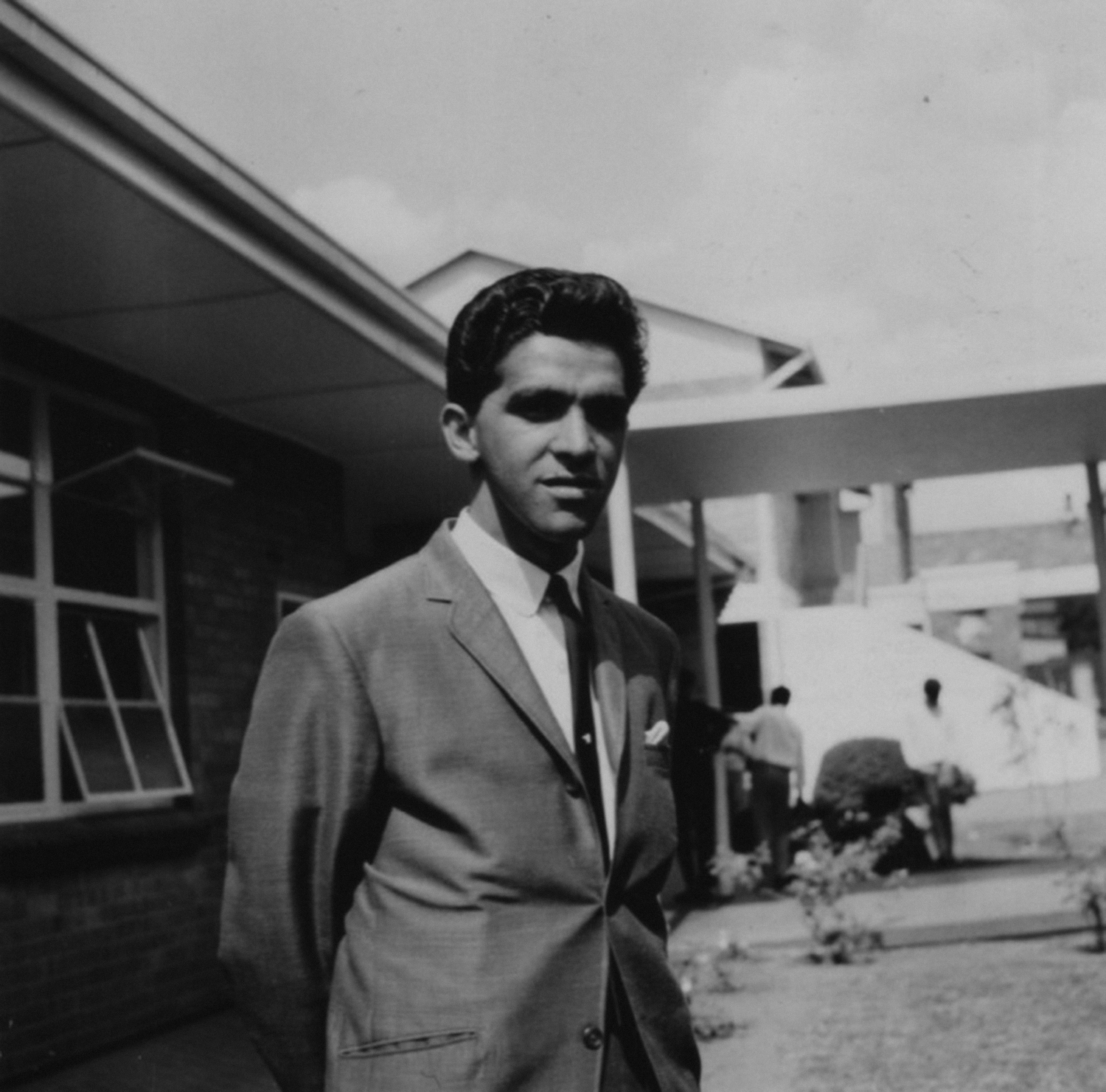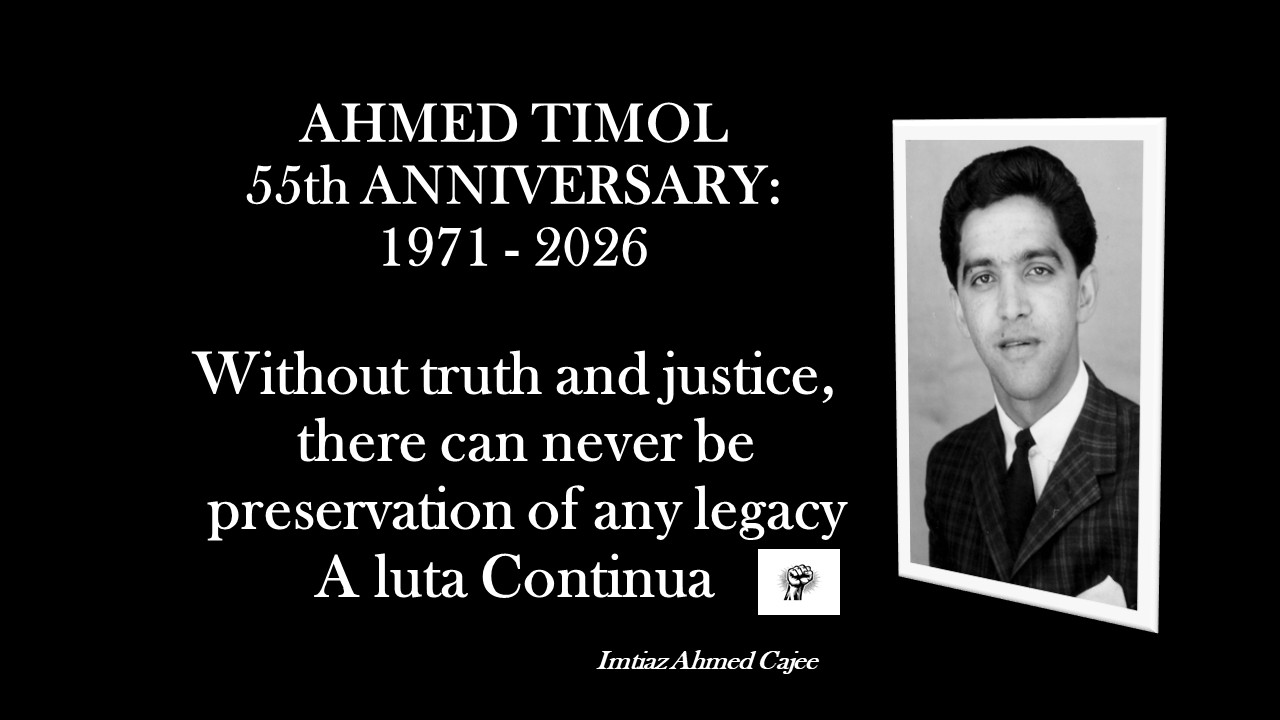
October 27 2026 will commemorate the 55th anniversary of the murder in police detention of Ahmed Timol, a brave and courageous fighter, who envisioned a free South Africa, for all who live in it.

This series, tells the stories of his life, his legacy and the ongoing quest for justice and accountability.

Courtesy of IOL and The National 

IOL NEWS OPINION 18 October 2026 IMTIAZ AHMED CAJEE

https://iol.co.za/news/opinion/2026-10-18-how-ahmed-timol-challenged-apartheid-in-the-classroom/

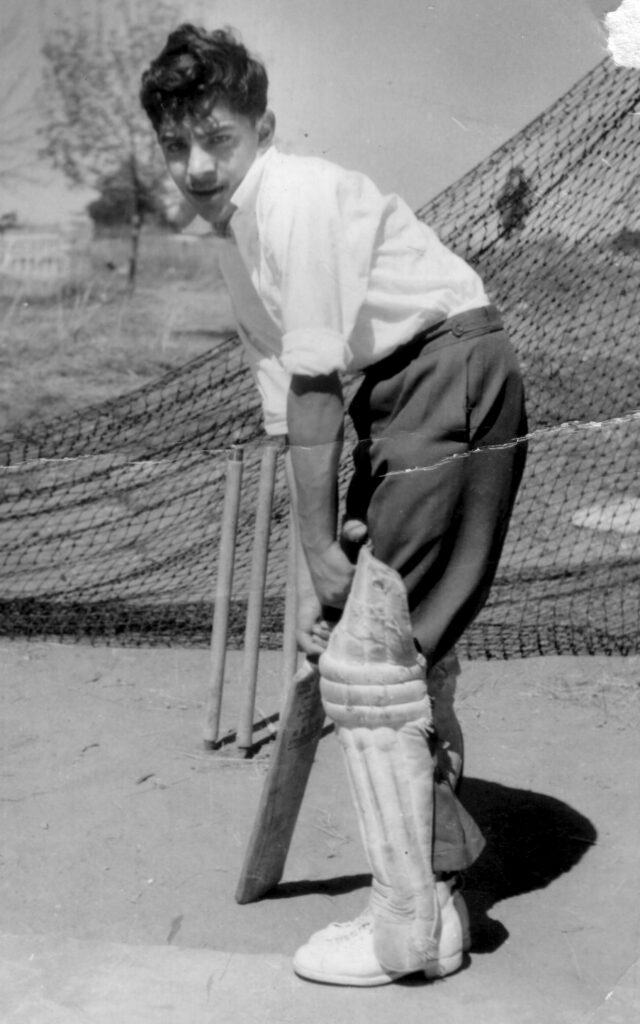
Born into a hardworking family in the then Eastern Transvaal, Ahmed Timol grew up amid economic hardship and the rising tensions of apartheid South Africa. His youth in Roodepoort and Johannesburg shaped a sharp political consciousness that guided him through his student years and into the classroom. As a teacher at the then Roodepoort Indian High School, Timol challenged state narratives, conscientising students and standing firm in his political principles. His early life reveals the intellectual and moral foundations of an activist who dared to defy the apartheid regime.

Haji Yusuf Ahmed Timol arrived in South Africa from India and settled in Heidelberg (Mpumalanga). In 1933, he married Hawa Ismail Dindar. Her father Ismail Dindar had also arrived from India and opened a retail shop in Breyten in the Eastern Transvaal (now Mpumalanga). Haji Timol worked for his in-laws in Breyten from 1934 to 1949 managing the main store, Amod and Ismail.

With coal mines and an important railway junction in the region, business in Breyten was profitable at the time. Ahmed Timol was born in Breyten on 3 November 1941. He had two sisters, Zubeida and Aysha, and three brothers, Ismail, Mohammed and Haroon. Hawa lost two babies who died at birth before Ahmed was born, and another, Fatima, died subsequently, aged just nine months.

The Timol family moved to Roodepoort in 1949, the gold-mining area of the fast-growing Johannesburg. Haji Timol was a wholesaler specialising in rice with GH (Goolam Hussein) Bhabha and he also sold khaki material at a small shop in Market Street, Johannesburg. As this business venture did not work out, the family relocated to Balfour in the South-Eastern Transvaal (Mpumalanga) where Haji Timol opened a bicycle shop.


Ahmed Timol’s Schooling

With no high school in Balfour, Ahmed went to school in Standerton, boarding at the local hostel. After Haji Timol’s business initiative in Balfour struggled and with Ahmed falling seriously ill in Standerton, the family relocated to Roodepoort. 

The Timol family were now tenants at Flat Number 2 in Choonara’s Building, 76 Mare Street. Haji Timol opened a café shop that was later destroyed by fire after he forgot to switch off the chip fryer as he was rushing off for Ramadan (fasting) prayers. Having poor eye-sight, Haji Timol underwent an eye operation as he had advanced cataracts and additional eye disorders.


Life was tough for the Timol family. Hawa sewed for additional income and her daughter Aysha was forced to leave school while in Standard Five in 1956. Zubeida had married Rashid Ahmed Chotia earlier and had moved to Machadodorp in Mpumalanga. Aysha contributed to the family’s survival by attending dressmaking and pattern-designing courses to supplement an additional income for the family.

Attending Roodepoort Primary School, Ahmed, made a speech around 1956 about Egypt’s President Nasser Hussein nationalising the Suez Canal. The teacher, Mr Baker warned him that his speech was political. As there was no high school for Indian students in Roodepoort, Ahmed travelled by train to complete his secondary school at the Johannesburg Indian High School. After matriculating with a senior certificate with a matric exemption in 1959 (aged 18), Ahmed spent a year with Goolam Mohamed Ahmed Khota (Goramota), one of the very few non-white bookkeepers in the 1950s and 1960s.

Ahmed Timol Scholarship

He provided free bookkeeping lessons to students all over the country, at no cost. This was unique as Goramota paid his students as they worked and there were no financial reward for him.

After obtaining a scholarship from the Kholvad Madressa, Ahmed did a teaching course at the Johannesburg Training Institute for Indian Teachers, the only institution of higher education for Indians in the province of Transvaal (Gauteng) at a time when political movements were illegal and all forms of mass struggle banned.

This did not deter Ahmed. Between1962 and 1963, he was elected vice-chairman of the Students’ Representative Council. In the same year, the college union became affiliated to the National Union of South African Students despite college authorities threatening to victimise those associated with the union. When specialised subjects such as Mathematics, Afrikaans and History were introduced in 1962, Ahmed refused to take Afrikaans as he viewed this as the language of the oppressor. On another occasion, a lecturer referred to him as a “bloody communist”, while chasing him around a table.

In his final speech at the college, Ahmed focused on the conditioning and brainwashing of students, appealing to them to “learn to think” and to “read the media”.

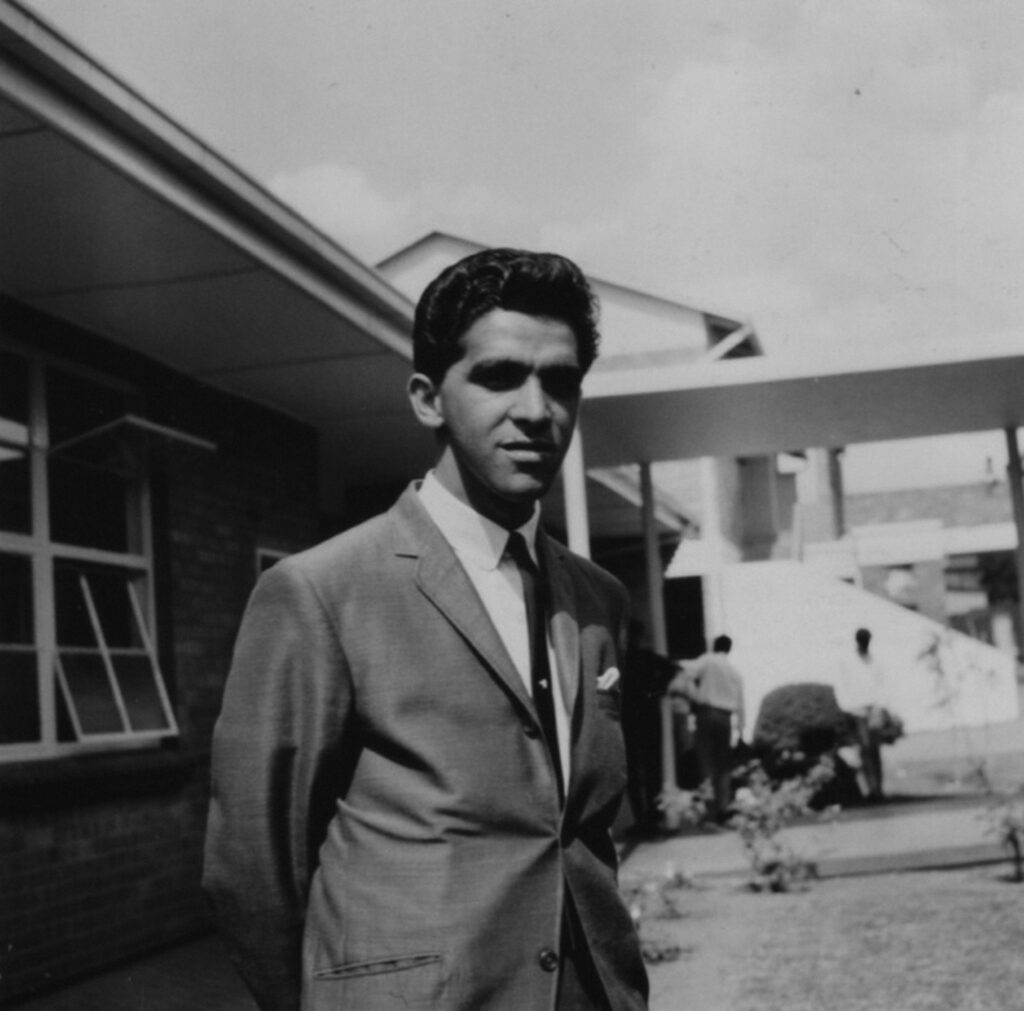
After successfully completing his teacher’s diploma in 1963, he took up a teaching post at the Roodepoort Indian High School (RIHS) until 1966.

On 9 September 1964, Suliman Saloojee (Babla) died in police detention after falling 20 meters from the seventh-floor window of the Johannesburg Security Branch police headquarters, the Grays, on the corner of Von Wielligh and Main Streets. Police claimed he committed suicide by jumping, making him the fourth detainee to have died in police detention. Ahmed attended the funeral, not knowing that seven years later, a similar fate awaited him.

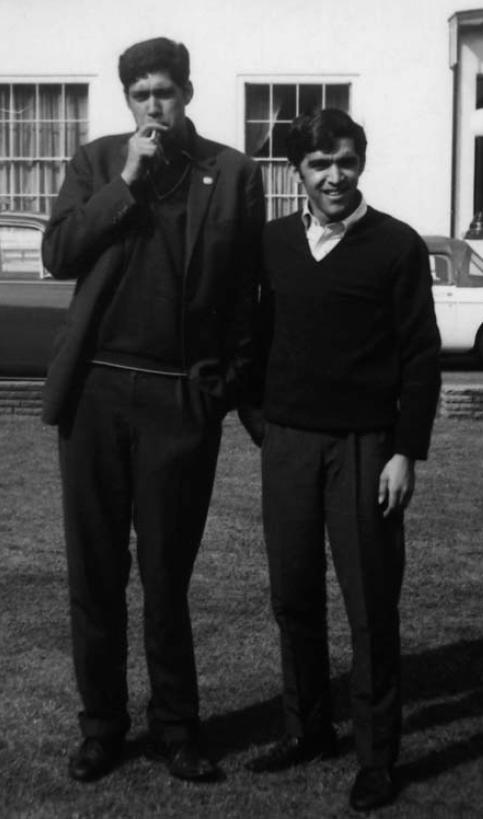
In January 1964, Ahmed’s close friends Aziz and Essop Pahad were banned for five years and in December they went to London on an exit permit.

Despite his stutter, students at the RIHS viewed Ahmed as one of the most popular teachers. He was always the first to greet them and he treated them equally, irrespective of their family backgrounds. He did not believe in failing his students and constantly reminded them that their parents were the breadwinners for their families.

Ahmed used every opportunity to conscientise his students at the apartheid-government controlled school. He deviated from the prescribed textbook of South African history and introduced what he considered to be the true perspective on South African history. The School Incident Book recorded that A Timol ‘would not be able to attend the Republic Festival to be held at the Union Stadium on 11 May 1966, because of strong personal convictions’.

* Imtiaz Ahmed Cajee is the nephew of Ahmed Timol and author of Timol – Quest for Justice (2005) and The Murder of Ahmed Timol – My search for the Truth. He is currently working on publishing his 3rd book. He is writing a series of stories to commemorate the 55th anniversary of the murder in police detention of Ahmed Timol.

This article was first published by The National.

IOL

IOL NEWS OPINION 18 Octoer 2026 by IMTIAZ AHMED CAJEE

https://iol.co.za/news/opinion/2026-10-18-why-ahmed-timol-celebrated-papwa-sewgolum-and-precious-mckenzie/

More than sixty years ago, Struggle icon Ahmed Timol made a call for an end to the exclusion, segregated facilities and international isolation that black South African athletes and sporting associations faced.

In 1965, Struggle activist Ahmed Timol called for an end to the exclusion, segregated facilities and international isolation that black South African athletes and sporting associations faced. His historical commentary honoured pioneers including Precious McKenzie and Papwa Sewgolum while calling for non-racial sport.

It has become an indisputable fact that in recent years non-white sports-men through their respective associations have successfully strengthened their case for recognition and affiliation to international sporting bodies. This happy state of affairs has materialised primarily due to the undaunted and inspiring efforts of the sportsmen themselves under the watchful eye and guidance of the sporting associations. It must, however, be emphatically stated that the task of the non-white sportsman in raising himself to international status has not been an unenviable one.

His path to achieve recognition, through his associations, has not been one strewn with flowers – his has been an uphill struggle, hindered and hampered at every turn.

Precious McKenzie

His “path” has revealed major obstacles. Above all, his associations have found themselves compelled to tread on dangerous terrain, a terrain that has revealed sharp stones and other obstructionist elements, thus making progress difficult. But in spite of these imposed hardships and with abundance of patience, strength and together with his associations, he has successfully negotiated the “path” destined for international recognition.

The words of Nehru that “Success only comes to those who act bravely and boldly and never to the timid” must have been firmly rooted in the minds of our sportsmen and administrators during their days of trials and tribulations.

We are immensely proud of the achievements of our non-white sportsmen, who have stamped their names in international sporting circles. We are proud of them because they have been instrumental in spotlighting the attention of the dilemma facing our sportsmen in their fight to compete as true representatives of all South Africa within the arena of international sporting events.

Our hearts go out toa man like Precious McKenzie, the weightlifting hero, who has virtually sacrificed his career, a career which should have yielded him rich rewards and international fame, because he stuck to his principles that he would represent all of South Africa in inter-national events and not only a section of the population.


Sport that defied apartheid

In the golfing world, we have our own Papwa, who has successfully crashed the barrier to participate in national golfing events within the country and his success overseas, particularly in the Dutch Open. In the boxing arena, who can challenge the reputation gained by “Schoolboy” Nhlapo, Levi Madi, Joe Ngidi and the one-time Empire lightweight champion Jake Tuli?

On the athletic track, the half-milers Humphrey Kosi and Benoni Malaka are today the top athletes in our country. On the tennis court, David Samaai, Jasmat Dhiraj and a host of others have proven themselves over and over again.

On the other hand, we find cricketers Oliveira, Abrahams and soccerites Johannesen and Steve Mokone have left our country to become sporting exiles and who are presently gaining tremendous prestige and reputation for their sporting prowess. These are a few of the present sportsmen, but what about those who have lapsed into retirement and those who have died obscured and forgotten by the passage of time? And what about those yet to come, those future sports-men who are still young and eager, who must be nursed and trained and must yet face up to the rigours of competitive sport?


We solemnly ask, must their sporting life be jeopardised because of humiliating affiliations and lack of facilities and thus become victims of political machinations?

Must these sportsmen of the future be deprived of sports just because they do not belong to the “right” associations? Must their associations be arbitrarily kicked from the use of their grounds, which were properly administered and controlled for over 30 to 40 years because they refuse, on matters of principles, to subject themselves to subservient affiliations?

We ask these questions because national sports in our country have reached a crucial stage. A situation has arisen where we find our country either suspended or expelled from the sporting fraternity of the world. Suspended from the Olympics and Fifa and threats of expulsion hanging over tennis, swimming, weightlifting, amateur boxing, cricket as well as all other national sports.

It is an inborn human urge that a time comes when one asserts one’s human rights. Similarly, in the sporting world, the day has dawned when our sportsmen are asserting their rights for recognition. They are excelling in sports; their records and deeds justifies them to compete in international events. We therefore call upon the white sporting administrators that the ball is at your feet; it is up to you to square up to the realities of the dilemma facing South African sports.

It is up to you to decide whether to sacrifice national sports at the altar of traditional policies or whether to pursue bold, progressive policies. Policies, which are within the mainstream of enlightened thinking in the world today.

One thing is sure, that if enlightened policies are infused into sports, a long lease of life for sports is well assured. On the other hand, the application of traditional policies will undoubtedly contribute to the immediate death of any hope to compete with other countries or to participate in international events – the door will be firmly closed in our face.

Traditions are good as long as they do not hamper progress, but once progress is hampered, and in this case the progress and very existence of our sport is threatened, traditional policies should be quickly done away with.

* This article by Timol was published in the souvenir brochure of the Dynamos Soccer Festival, held in September 1965. Timol was a Football Administrator for Dynamos, named after Dynamo Moscow.

IOL
IOL NEWS OPINION 17 October 2026 by IMTIAZ AHMED CAJEE

https://iol.co.za/sundayindependent/news/2026-10-17-ahmed-timols-journey-from-hajj-to-the-underground-struggle/

Ahmed Timol left South Africa in December 1966 to perform the Hajj, beginning a journey that deepened his political commitment. In London, the teacher stayed with Aziz and Essop Pahad, taught immigrant children and met Ruth Longoni at an anti-nuclear march. His involvement with the South African Communist Party led to political and underground training in the Soviet Union, followed by further instruction in London. Despite recognising the risk of arrest, Timol returned to South Africa in February 1970. His nephew, author Imtiaz Ahmed Cajee, recounts the love, relationships and convictions that shaped his decision to continue the struggle against apartheid.

When Ahmed Timol had completed his third year as a teacher at the Roodepoort Indian High School (RIHS) at the end of 1966, he had travelled only in a small corner of South Africa. His horizons were about to expand immeasurably. He left South Africa on 25 December 1966 to perform the Hajj (5th Pillar of Islam) in Saudi Arabia. At the time, few Muslims embarked on the pilgrimage to Mecca at such a tender age. He was just 25 years old.

During the pilgrimage, he met Dr Yusuf Dadoo (Mota) and Molvi Cachalia. Dadoo was an anti-apartheid leader with impeccable credentials, who chaired both the South African Communist Party (SACP) and the South African Indian Congress (SAIC), whilst Cachalia was another senior South African anti-apartheid activist. Fellow Haji’s recall how helpful Timol was during the pilgrimage by assisting in carrying their luggage.

Ahmed Timol in London

After the pilgrimage, Timol toured Cairo, Egypt for a few weeks and arrived in London in April 1967 and stayed at the flat of his friends Aziz and Essop Pahad in North end House, West Kensington. To make a living, Ahmed taught children from the Indian subcontinent (India, Pakistan and Bangladesh) at an immigrant school in Slough, approximately 34km from London.

He was also an active member of the National Union of Teachers and also furthered his studies by attending evening classes to fulfil the requirements to write his A-Levels, a prerequisite for acceptance to study at a British university or polytechnic. This was equivalent to a South African Standard Nine and in order for one to do a tertiary course or degree, one had to do A levels. Timol enrolled to broaden his mind, rather than to enter university.

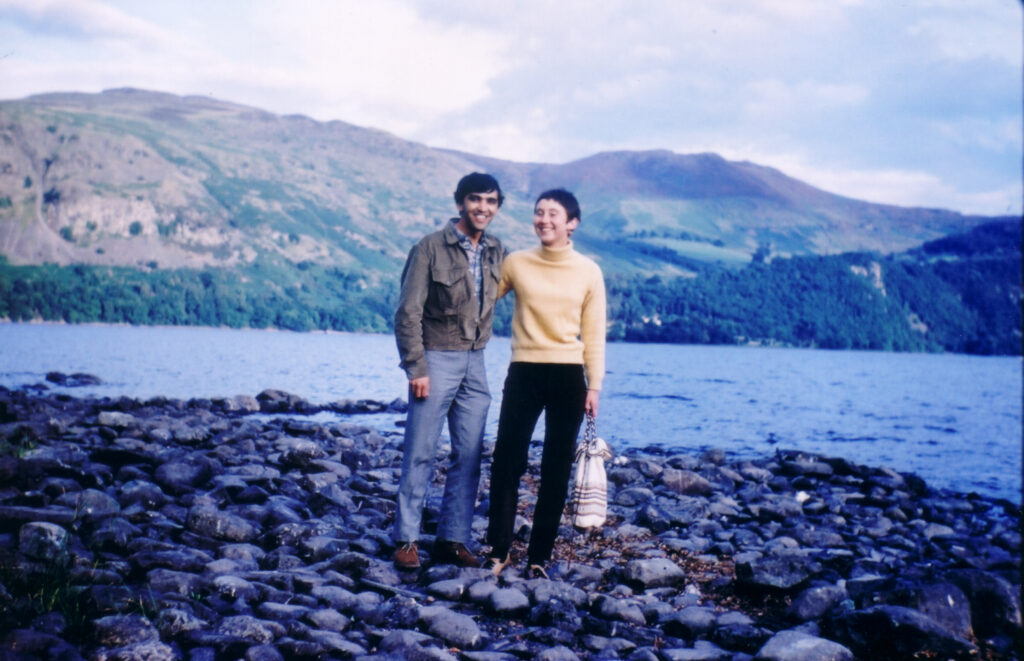
During his stay in London, Timol met the love of his life, Ruth Longoni who was working for Labour Monthly, a journal edited by Palme Dutt Ranjit, a founding member of the Communist Party of Great Britain and one of the founding members of the magazine. They met around Easter in 1967 attending an Aldermaston march organised by the Campaign for Nuclear Disarmament. Ahmed was interested in people and was talking to those attending the march ascertaining the reasons for their being there.

A week later Ahmed called Ruth and within a short period of time, Ruth realised that they shared a great deal in common, despite coming from different backgrounds. The pair were also emotionally on the same wavelength and Ruth was also a member of Communist Party of Great Britain.

Timol shared with Ruth his experiences of living in South Africa. He spoke about the daily humiliations that Indian South Africans faced in various ways.

This included not going to certain restaurants and that if he went out with friends, they would have to get drinks from a kiosk and other similar problems. However, he described the situation for a black South African as being far worse and he had tremendous feelings of compassion and anger at the treatment meted out to black South Africans.

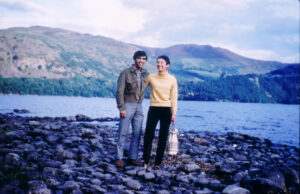
AHMED TImol and Ruth Longoni in England in the last 1960s. DR FAROUK DINDAR

Underground Political Training

Ruth saw Timol as a man of tremendous compassion who had great deal of empathy with the oppressed people of South Africa and wanted to effectively change their situation. Timol also spoke of his deep affection for his mother Hawa and described her as a kind, simple and loving woman.

In September 1968, Timol’s younger brother Mohammad, aged 19, arrived in England after acquiring a scholarship from the Roodepoort Muslim Society to study textile engineering at Leicester Polytechnical College.

At the time, London was the headquarters for the exiled ANC leadership and its membership was public knowledge. However, membership of the Communist Party was totally secret and only known to members belonging to a particular unit. Ahmed reunited with Dr Dadoo, a leading figure of the Communist Party, holding discussions with him.

During his stay in London, he displayed his keen interest in executing serious tasks for the movement. There was consensus that it was important to build underground structures in South Africa and to intensify the armed revolutionary struggle.

A decision was taken by Dr Dadoo and the Communist Party leadership for Ahmed to go to the Party School, the Institute of Social Studies, also called the International Lenin School, in the Soviet Union.

Timol, aged 28, accompanied by future President Thabo Mbeki and Ann Nicholson had undergone political training in the Soviet Union and enrolled for political studies from February until October 1969. The various training courses Ahmed attended included political economy and philosophy, social psychology of a people, how to work with people, history of the CPSU (Communist Party of the Soviet Union), how to set up dead letter boxes, setting up of underground structures, how to recruit members and radio communication.

Founding member of uMkhonto we Sizwe

Upon his return to London, Ahmed received additional training for four weeks from Jack Hodgson. He was a member of the South African Communist Party, founding member of uMkhonto we Sizwe (MK) who trained cadres before its launch on 16 December 1961 and after being placed under house arrest in 1963, he and his wife Rica left the country and went to exile in London.

Ahmed and Essop spoke in detail about conducting underground work. He had to be very careful and the possibility of his arrest upon his return was very high, especially in view of his residence with the Pahad brothers in London. They also discussed how Ahmed was to respond under torture.

Ultimately, Ahmed took the decision to leave London and return to South Africa. This demonstrates the sacrifice he was willing to make by leaving Ruth and the comforts of London to return to South Africa in February 1970 to continue the Struggle. A luta Continua!

Imtiaz Ahmed Cajee is the nephew of Ahmed Timol and author of TIMOL – QUEST FOR JUSTICE (2005) and THE MURDER OF AHMED TIMOL – MY SEARCH FOR THE TRUTH. He is currently working on publishing his third book. 

This article was first published by The National

IOL

IOL NEWS OPINION 26 October 2026 IMTIAZ AHMED CAJEE

https://iol.co.za/news/opinion/2026-10-26-the-arrest-and-death-of-ahmed-timol-at-john-vorster-square/

Anti-apartheid activist and teacher Ahmed Timol told colleagues in the staffroom on Friday, 22 October 1971, that Suliman “Babla” Saloojee, a member of the Transvaal Indian Congress, had not died by suicide but had been murdered seven years earlier.

During the final lesson of the day, Timol remarked that he would live for 500 years and become more famous than the president of the world.

His remarks suggested that he may have had a premonition of his impending death.

Later that evening, at about 6.45pm, Timol gazed at his mother, Hawa, for an extended period. Concerned about her health, he told her how much he loved her.

As he left the family flat, he saw his father, Haji Timol, and assured him that he would return home soon.

The events leading to Timol’s arrest

Timol walked to Amina Desai’s residence nearby and asked for the keys to her Ford Anglia, as he had done on previous occasions.

Salim Essop, a former pupil of Timol’s who was studying medicine at the University of the Witwatersrand, joined him in the vehicle.

They visited Rashida Mangera in Fordsburg, delivered a parcel for Desai to a dressmaker in Newclare and stopped to see their friend, Irene Summers, also in Newclare.

Timol invited Summers to accompany them to a party in Vrededorp, but she declined. Before leaving, they removed banners and other material from the Anglia’s boot.

According to police reports, officers stationed at Newlands Police Station reported for special duty at 3.45pm that day.

At approximately 10.40pm, they manned a roadblock on Fuel Road. At about 11.10pm, they stopped a yellow, two-door Ford Anglia occupied by Timol and Essop.

Police claimed to have discovered banned political literature in the vehicle’s boot.

However, questions remain about the circumstances of their arrest.

If Timol had known he was under surveillance, it seems unlikely that he would have travelled with banned political literature in the vehicle. Summers also confirmed that they had emptied the boot earlier that evening.

An arrest order for Timol was signed that same day by South African Police Commissioner G.J. Joubert, lending weight to the argument that the roadblock may have been orchestrated rather than coincidental.

The circumstances bear similarities to other apartheid-era arrests, including those of Nelson Mandela on 5 August 1962 and Bantu Stephen Biko on 18 August 1977.

The Cradock Four — Matthew Goniwe, Fort Calata, Sparrow Mkhonto and Sicelo Mhlauli — were also intercepted at a roadblock on 27 June 1985.


A nationwide crackdown on anti-apartheid activists

The arrests of Timol and Essop were not isolated incidents. They formed part of a nationwide crackdown on anti-apartheid activists in October 1971, described as the most extensive since the Rivonia Trial of the 1960s.

Several other people were detained under Section 6 of the Terrorism Act of 1967.

Those held at John Vorster Square included:

  • Fatima Essop, also known as Mayet, Salim’s sister from Roodepoort.
  • Kantilal Chaganlal Naik, also known as Kanti, a teacher from Roodepoort.
  • Amina Desai, a businesswoman from Roodepoort.
  • Yusuf Garda, also known as Chubb, a Johannesburg shopkeeper.
  • Mohammed Ishmael Momoniat, a Johannesburg doctor and social administrator.
  • Yunus Patel, a fourth-year engineering student at the University of the Witwatersrand.
  • Hassen Ahmed Jooma, also known as Boetie, a teacher from Laudium, Pretoria.
  • Dilshad Jhetham, also known as Dilshadbegum, a second-year medical student at the University of the Witwatersrand.
  • Mohammed Hoosen Dinath, a salesman.
  • Gadija Chotia, a Johannesburg secretary.
  • Shireen Areef, a former student in Johannesburg.
  • Moegamat Noor Matthews, a primary school teacher from Bosmont, Johannesburg.
  • Mohammed Amin Essop.

The alternative names listed were recorded by police as aliases.

Other detainees were held at police stations across the country.

Cornelius Tebogo Lekhogole was detained in the Florida police cells.

David Kennelly Davis, an arts student at the University of Durban, and Fatima Wadee, also a student at the university, were held at the Durban North police cells.

Indhrasen Moodley, a pharmacy lecturer at the University of Durban, was detained at Mayville Police Station in Durban.

Ayesha Bulbulia, a typist from Johannesburg, was detained in the Krugersdorp police cells.

Yakoob Varachia was held at Rossburgh Police Station in Durban, while Timol’s brother, Mohammed, was detained at Berea Police Station, also in Durban.


Detention at John Vorster Square

Following their arrest, Timol and Essop were taken to Newlands Police Station before being transferred separately to John Vorster Square Police Station, now known as Johannesburg Central Police Station, in the early hours of Saturday, 23 October.

After Timol’s arrest, security police repeatedly raided the family’s flat in Roodepoort.

During a visit on Tuesday, 26 October, Hawa spoke to Detective Officer Van Rensburg, who refused to allow her to see her son.

He told her that Timol had been arrested because he had been “naughty” and that, had she given him a hiding, she would not have been crying.

That same day, Essop was carried out of John Vorster Square on a stretcher and taken to Johannesburg General Hospital.

Medical staff reported that he had been severely assaulted and was suffering from what was then described as “clinical hysteria”.

He was transferred later that day to HF Verwoerd Hospital in Pretoria, where he remained under constant police guard.

The death of Ahmed Timol

Early on Wednesday, 27 October, police returned to the Timol family flat and searched all the dustbins. Domestic workers were also interrogated.

Officers returned shortly after sunset prayers. During the visit, one of them pushed Hawa into a seat and told her that Timol had attempted to escape by jumping from the 10th floor of John Vorster Square.

This was the police account of his death, a version subsequently discredited by the reopened inquest, which found that Timol had been murdered.

Hawa was left with the devastating task of informing her husband that their son’s body was at the government mortuary in Hillbrow, Johannesburg.

Timol was 29, just days short of his 30th birthday.

On Friday morning, 29 October, Haji Timol visited the Hillbrow mortuary and identified his son’s body, recorded as “Body 399/171”.

A final farewell to an anti-apartheid activist

Timol’s body was taken to Newtown Mosque in Johannesburg, where it was washed and prepared for burial in accordance with Islamic rites.

Following Friday prayers at the mosque, his body was placed in a coffin and transported by a Muslim hearse to the family flat in Roodepoort.

At Roodepoort Mosque, the owner of A.G. Ally, a close friend of Haji Timol, stood and called on local business owners to close their shops as a mark of respect.

Timol was the 22nd detainee reported to have died in police custody under apartheid.

Looksmart Ngudle, who died in detention in 1963, was the first. Many more deaths in police custody would follow.

Timol’s death remains a powerful symbol of the brutality of apartheid-era detention and the long struggle to uncover the truth about those who died at the hands of the security police.

The author, Cajee, is Ahmed Timol’s nephew and the author of “Timol — Quest for Justice” (2005) and “The Murder of Ahmed Timol — My Search for the Truth”. He is currently working on his third book.

This was first published by The National

IOL Opinion